
Last updated November 18, 2026
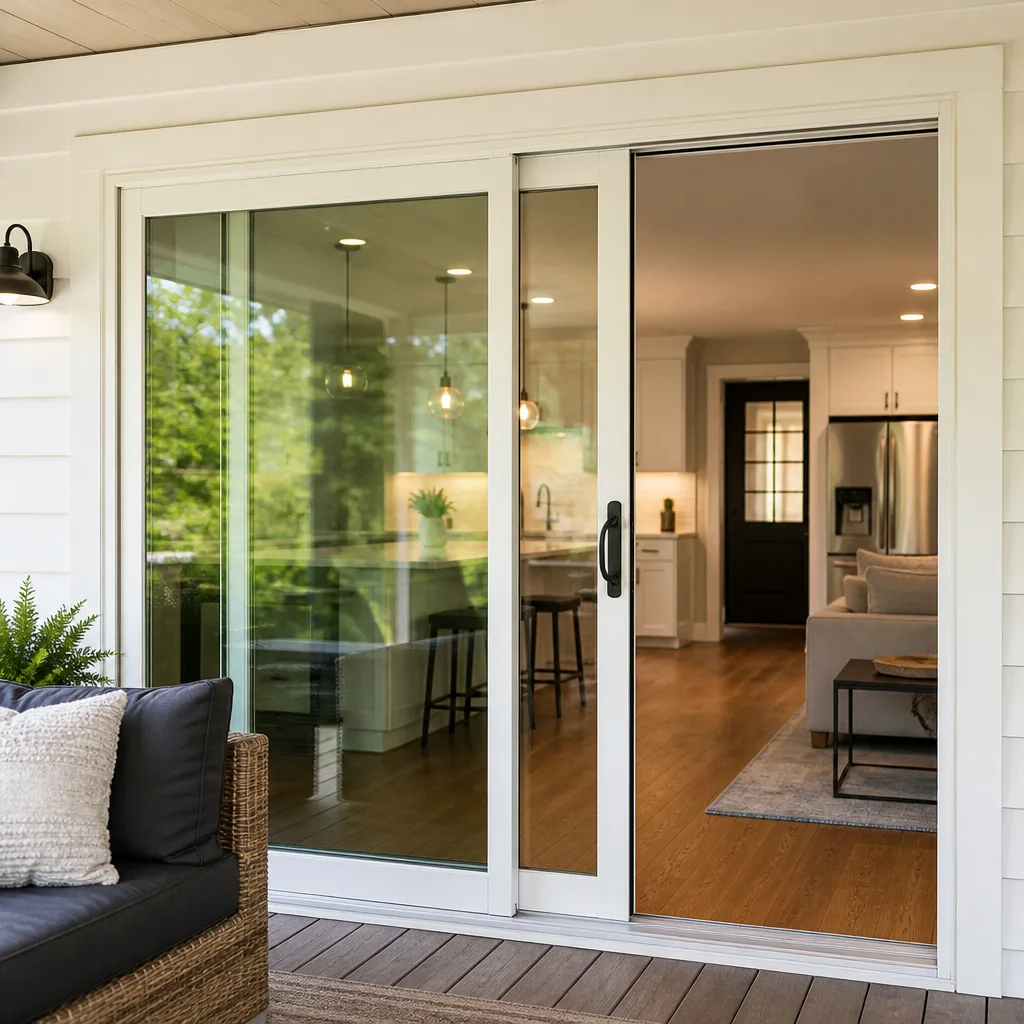 Sliding glass doors
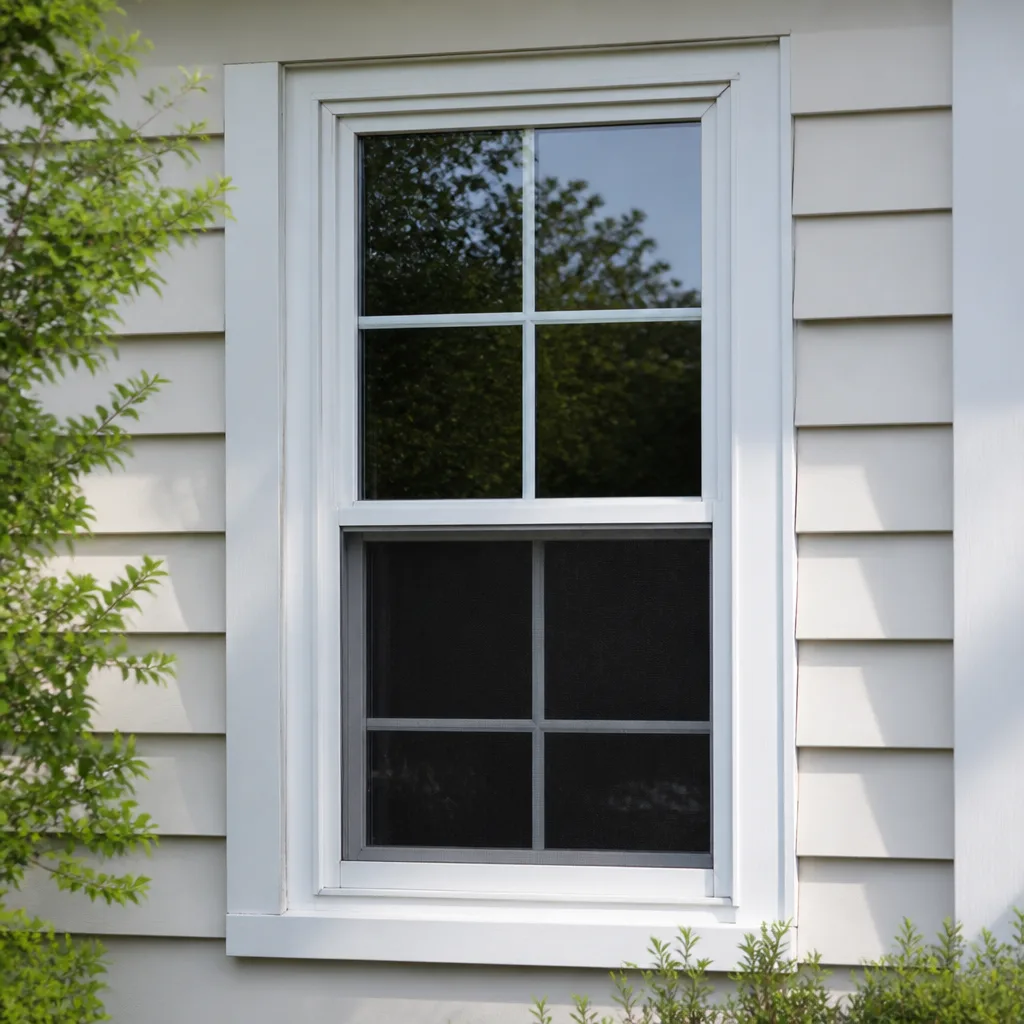 Single hung
 Double hung
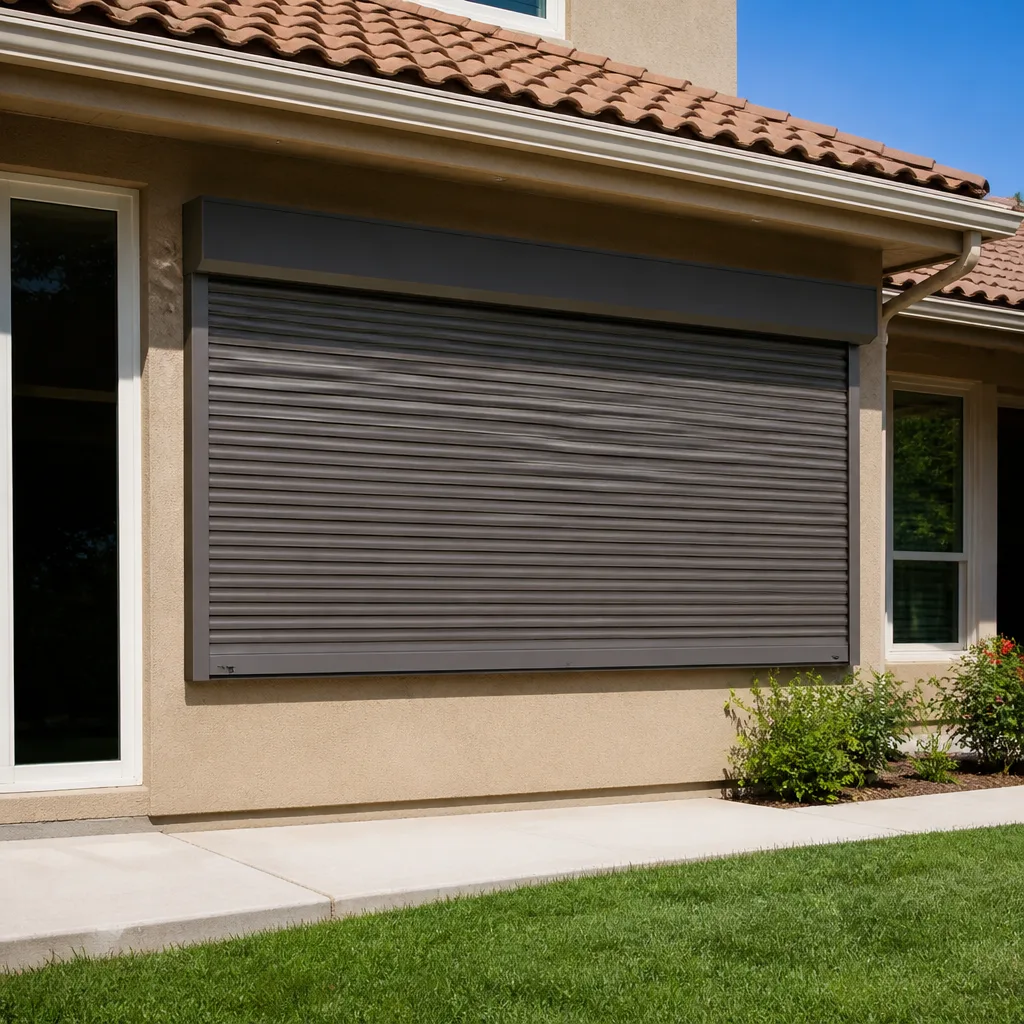 Horizontal roller
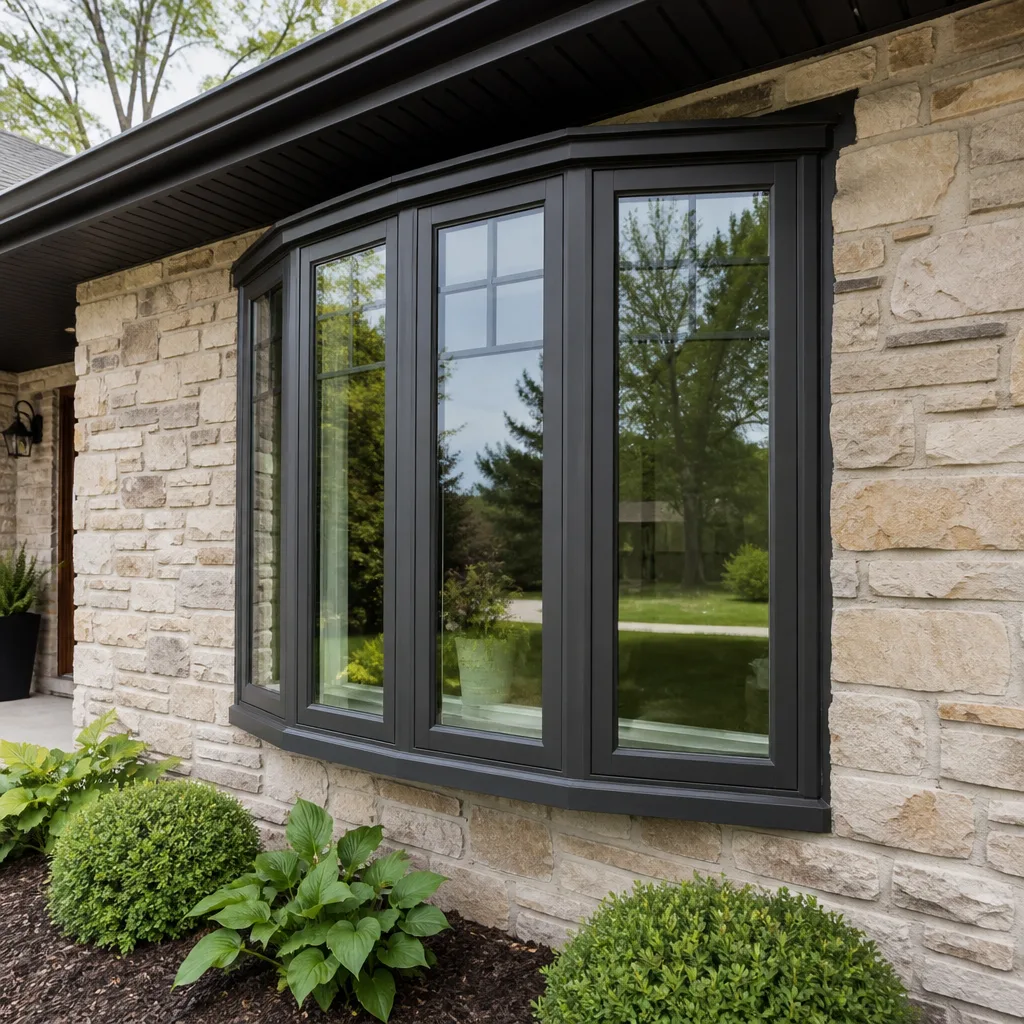 Casement
 Bay & bow
 Entry doors
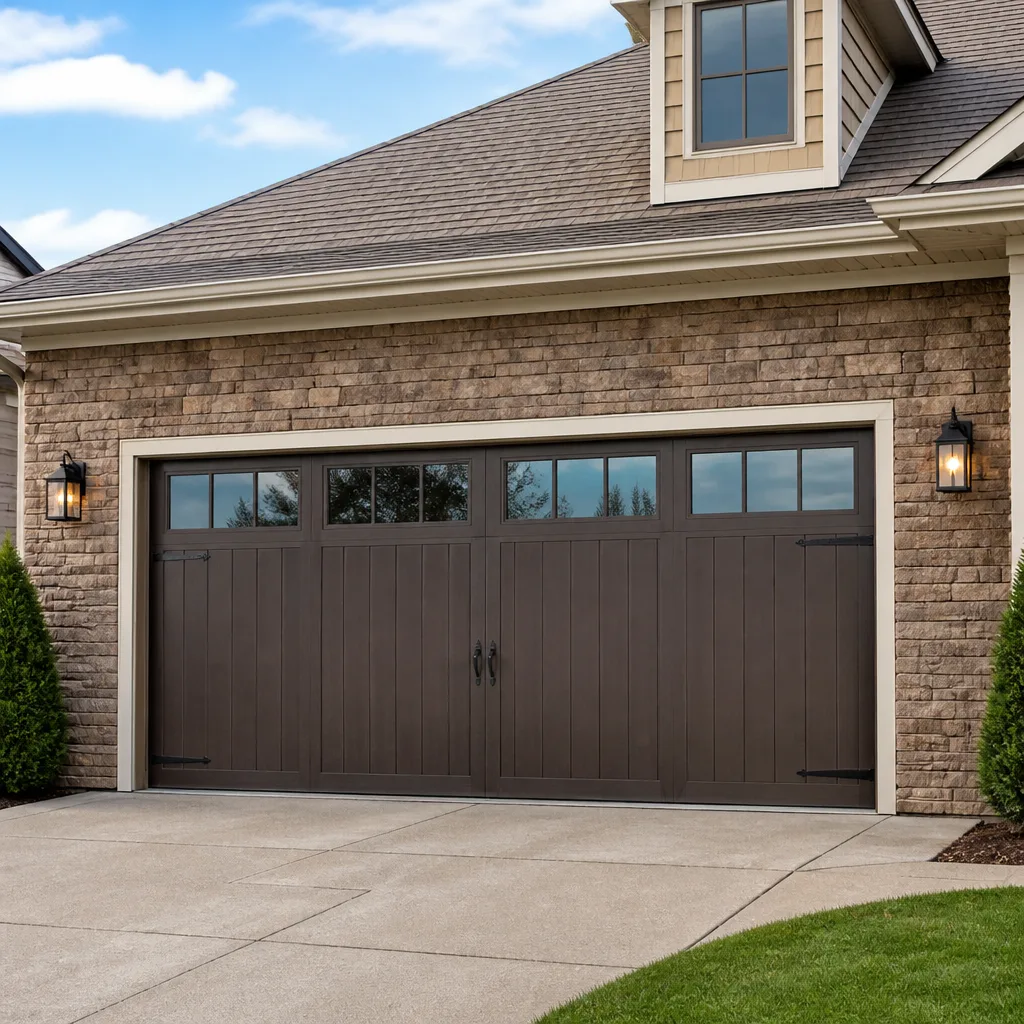 Impact garage doors
 PGT
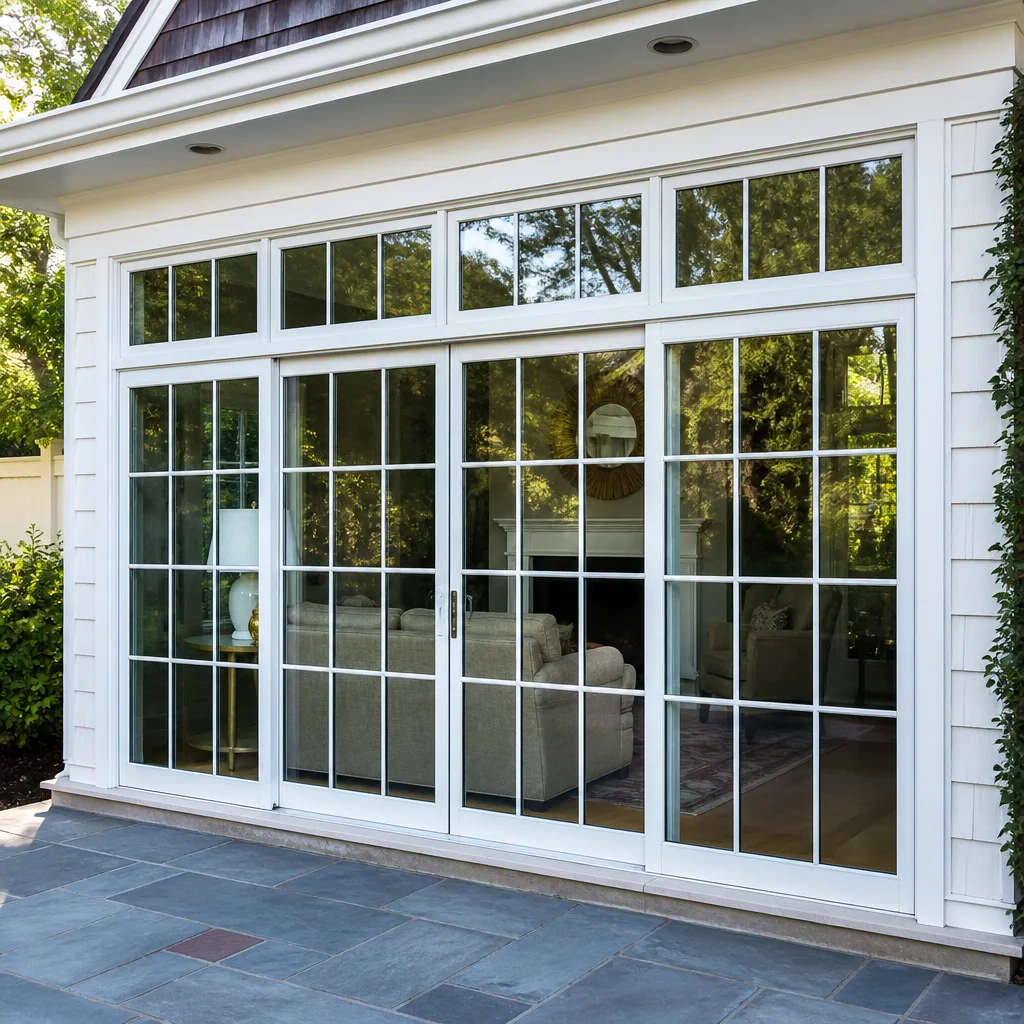 CGI
Free in-home measure and quote - PGT, CGI and CWS impact lines compared on your actual openings, style by style
Get your free estimateWindows & Doors Permits, Codes & Inspections in NV: What You Need to Know
A Spring Valley homeowner recently watched a home sale stall for three weeks in escrow. The buyer’s title search turned up an open permit violation from a 2019 window replacement that was never signed off by the county. The installer who did the work was long gone. The homeowner paid to make it right, and paid again in lost time when the buyer’s lender balked. The lesson is blunt: in Clark County, a window or door replacement isn’t finished when the caulk dries. It’s finished when the permit is closed. This guide walks through what actually triggers a permit, what an inspector looks for, how HOA approval fits in, and what to do if you inherit an unpermitted job. We’ve spent enough time on Spring Valley job sites to know where homeowners get caught.
Quick Answer
In Clark County, a window or door replacement generally requires a building permit unless it’s a true like-for-like swap of the same size, same opening, and same operation type in an existing frame. Anything that changes the rough opening, adds or removes glass area, swaps a fixed unit for an operating one, or touches structural framing needs a permit and an inspection. Nevada’s adopted energy code also applies, so the inspector will check that the replacement meets current U-factor and solar heat gain requirements for this climate zone.
Styles & brands we work with
- Single hung
- Double hung
- Horizontal roller
- Casement
- Bay & bow
- Sliding glass doors
- Entry doors
- Impact garage doors
- PGT
- CGI
Table of Contents
- When Does a Window or Door Replacement Need a Permit in Clark County?
- What Counts as a “Like-for-Like” Swap
- Nevada Energy Code: What IECC Adoption Means for Your Replacement
- Building Permit vs. HOA Approval: Why You Need Both in Spring Valley
- What the Clark County Inspection Actually Checks, Step by Step
- How to Retroactively Permit an Unpermitted Window Installation
- Common Mistakes to Avoid
- Frequently Asked Questions
When Does a Window or Door Replacement Need a Permit in Clark County?
The short version: any change that alters the building envelope in a way that affects structural, water, or energy performance triggers a permit. A true same-size, same-type swap in an existing frame usually does not. Everything else does, and the Clark County Building Department enforces this more consistently than most homeowners expect.
Here’s the practical breakdown we walk Spring Valley customers through on nearly every estimate:
- Needs a permit: enlarging or shrinking a rough opening, cutting a new opening in a wall, converting a fixed window to a slider or casement, replacing a door with a different door type (french door to slider, hinged to pivot), any work that touches headers or framing, adding sidelights or transoms where there were none.
- Usually does not need a permit: replacing a double-hung with a same-size double-hung, replacing an existing sliding glass door with a same-size sliding glass door, swapping a door slab in an existing frame when the frame and rough opening stay put.
- Gray zone: replacing an old single-pane aluminum unit with a new energy-rated unit of slightly different frame depth. This depends on whether the rough opening is being modified. When we’re not sure, we file the permit.
Clark County’s review staff are strict about one thing in particular: separate inspections for structural changes versus simple replacements. If you’re pulling a header or altering a wall, the review timeline is longer and the inspection list is longer. If it’s a clean swap in the same opening, the process is faster. The boundary between the two is exactly where homeowners get surprised.
One detail worth knowing: since 2011, the county has tightened sign-off requirements on glass and glazing for impact-rated products in certain zones. If you’re replacing windows as part of a broader envelope upgrade in a Spring Valley community with recorded impact requirements, the inspector will ask for the product’s documentation. Here’s the impact window product guide we refer Spring Valley homeowners to for the specifics.
What Counts as a “Like-for-Like” Swap
A like-for-like swap means the window or door is being replaced with something functionally identical in the same opening. Same size, same operation, same frame construction, same glazing profile. In Clark County, that’s typically allowed without a permit because no structural, energy, or water envelope change is occurring. Sounds simple. It rarely is in practice.
Here’s the checklist we run through before we tell a Spring Valley homeowner they don’t need a permit:
- Same rough opening dimensions. Within a small tolerance of the existing unit. If we’re cutting or filling framing, it’s not like-for-like.
- Same operation type. A double-hung stays a double-hung. A casement stays a casement. A fixed panel stays fixed.
- Same glazing characteristics or better. If the original unit was single-pane and you’re going to energy-rated glass, most inspectors treat that as an improvement and don’t require a structural permit, but the county still expects the product to meet Nevada energy code. We document the spec sheet either way.
- Same frame material family. Vinyl to vinyl, aluminum to aluminum, wood to wood. Cross-material swaps almost always need a permit because the anchoring detail and flashing detail change.
- Same number of units per opening. Two separate units replacing a paired unit changes the framing logic. That’s a permit.
If any of those five checks fails, it’s a permit job. The county doesn’t want to catch you in a gray zone later, and neither do you when a buyer’s inspector is standing in your living room in 2028. For replacements that do require filing, here’s the window replacement process we use to keep the paperwork and the install moving together.
Nevada Energy Code: What IECC Adoption Means for Your Replacement
Nevada has adopted successive versions of the International Energy Conservation Code (IECC), and Clark County enforces those requirements at the permit and inspection stage. What that means for a Spring Valley homeowner: your replacement windows and doors have to meet a specific U-factor and Solar Heat Gain Coefficient (SHGC) for this climate zone, and the product documentation has to be available when the inspector asks.
Here’s what the inspector is actually verifying:
- U-factor compliance. The window’s rating has to be at or below the maximum for this climate zone. In practical terms, that’s a low-U double- or triple-pane unit for most Spring Valley replacements.
- SHGC compliance. Solar heat gain matters here. Spring Valley gets a lot of sun, and the code reflects that. Low-SHGC glass is the standard for east and west exposures.
- NFRC labeling. The National Fenestration Rating Council label, or the manufacturer’s spec sheet with NFRC data, has to be present. If your installer shows up with units that don’t have documented ratings, the inspection stops.
- Air leakage. Doors and window frames have to meet the air infiltration rate the code specifies. This is where sloppy anchoring and missing weatherstripping get flagged.
In our experience, the failures we see on Spring Valley jobs done by other contractors almost always trace back to one of two things: units that were spec’d to a lower standard than the code requires, or units that meet the code but arrived without documentation. Neither is the homeowner’s fault, and both delay the final inspection. The fix is straightforward if your installer knows the code before the order is placed. Brands like PGT and CGI publish the NFRC data with the product, which is one reason they come up so often in compliant installs.
Building Permit vs. HOA Approval: Why You Need Both in Spring Valley
These are two completely separate processes, and homeowners routinely finish one and forget the other. The Clark County Building Department cares about code, structural safety, and energy compliance. Your HOA cares about aesthetics and design consistency within the community. Getting a building permit does not get you HOA approval, and getting HOA approval does not satisfy the county. You need both, and in Spring Valley’s master-planned communities, they’re often both required.
Here’s how the two processes differ:
- Building permit: Filed with Clark County. Reviewed by the Building Department. Fee based on scope. Requires inspection at specific stages. Failure to close the permit creates title issues.
- HOA approval: Filed through your community’s architectural review committee (ARC). Reviews the color, style, mullion pattern, frame material, and sometimes the door hardware. Timeline varies from a week to six weeks depending on the community. Failure to get approval can force you to remove or repaint work at your own cost.
In Spring Valley specifically, we’ve seen the HOA architectural review timeline end up being the longer pole on the job. Some communities require a sample approval before the order is even placed, which means the lead time on your replacement runs longer than the permit review. If you skip the HOA step, you can have a perfectly permitted, code-compliant installation that the HOA then asks you to undo because the frame color doesn’t match the neighborhood standard.
We’ve also seen the reverse: an HOA-approved installation that stalls at the permit stage because the unit spec’d doesn’t meet the energy code. Both sides need to be worked in parallel, not one after the other. When we quote a job, we ask for the HOA documentation up front so the timeline doesn’t slip. Here’s our window installation overview if you want to see how the two processes interlock step by step.
What the Clark County Inspection Actually Checks, Step by Step
The inspection is not a mystery, and it’s not arbitrary. The county has a defined sequence, and if your installer knows it, the process moves fast. Here’s what happens, in order.
Step 1: Pre-Inspection Permit Posting
The permit has to be on-site and visible before work begins. The county inspector or their records check will flag an unposted permit. This is a paperwork step, but it’s the first thing checked.
Step 2: Rough-In Inspection (When Applicable)
If the work involves framing changes, header replacement, or opening modifications, there’s a rough-in stage. The inspector verifies the framing, header size, and attachment logic before the window or door goes in. For simple like-for-like replacements, this step is usually skipped.
Step 3: Flashing and Water-Resistive Barrier
This is where the inspection gets technical. The inspector verifies that the flashing around the new unit is installed correctly, the water-resistive barrier is intact, and the integration with existing building paper or house wrap is correct. Spring Valley’s monsoon-season rain events put this detail to the test more than most homeowners appreciate.
Step 4: Anchoring and Fastening
The anchor pattern has to match the manufacturer’s engineering. The inspector will check penetration depth, spacing, and the type of fastener used. Incorrect anchoring is one of the most common failure points on a Spring Valley re-inspection.
Step 5: Product Documentation Verification
The NFRC labels or spec sheets are reviewed against the code requirements for the climate zone. If the product doesn’t match the submitted permit documentation, the inspection fails and the units have to be either re-documented or replaced.
Step 6: Air Sealing and Weatherstripping
Gaps, unsealed penetrations, and improper weatherstripping on doors get flagged here. The county is not running a blower door test on a simple replacement, but a visual check is standard.
Step 7: Final Inspection and Permit Close
The final inspection confirms the sequence is complete and closes the permit. The permit record with a closed status is what shows up clean on a title search. This is the step that protects you at resale and this is the step that was skipped on the escrow story that opened this guide.
How to Retroactively Permit an Unpermitted Window Installation
If you’re reading this because you suspect a past replacement was never permitted, you’re not stuck. The process is more work, but it’s done all the time in Clark County, and doing it voluntarily before a title search finds it is far cheaper than doing it under deadline at closing.
Here’s the sequence we walk homeowners through:
- Pull the permit history. Search the Clark County Building Department’s online permit records for the property address. If a permit was pulled but never closed, that’s a different (easier) fix than a job that was never permitted at all.
- Document the current installation. Photograph the units, the frames, the flashing, the anchoring (as much as is visible without removal), and gather any manufacturer labels or spec sheets you can access. Without documentation, the county has no way to verify that what’s in the wall meets code.
- File a permit for the existing work. The county has a process for this. In many cases, they’ll require a modified scope that reflects what was actually installed, and the fee is based on that scope.
- Schedule the inspections in sequence. Retroactive permits generally go through the same inspection stages, with the caveat that rough-in that’s already covered by drywall can only be verified through what’s visible. The inspector will tell you what they need.
- Close the permit and get the record on file. Once the final inspection passes, the permit shows as closed, and the title search comes back clean.
If the units don’t meet current Nevada energy code, this is where the retrofit gets more expensive. We’ve had Spring Valley homeowners need to replace units entirely to bring an unpermitted 2015-era installation up to the standard Clark County now requires. Better to know that before closing than after.
See the difference
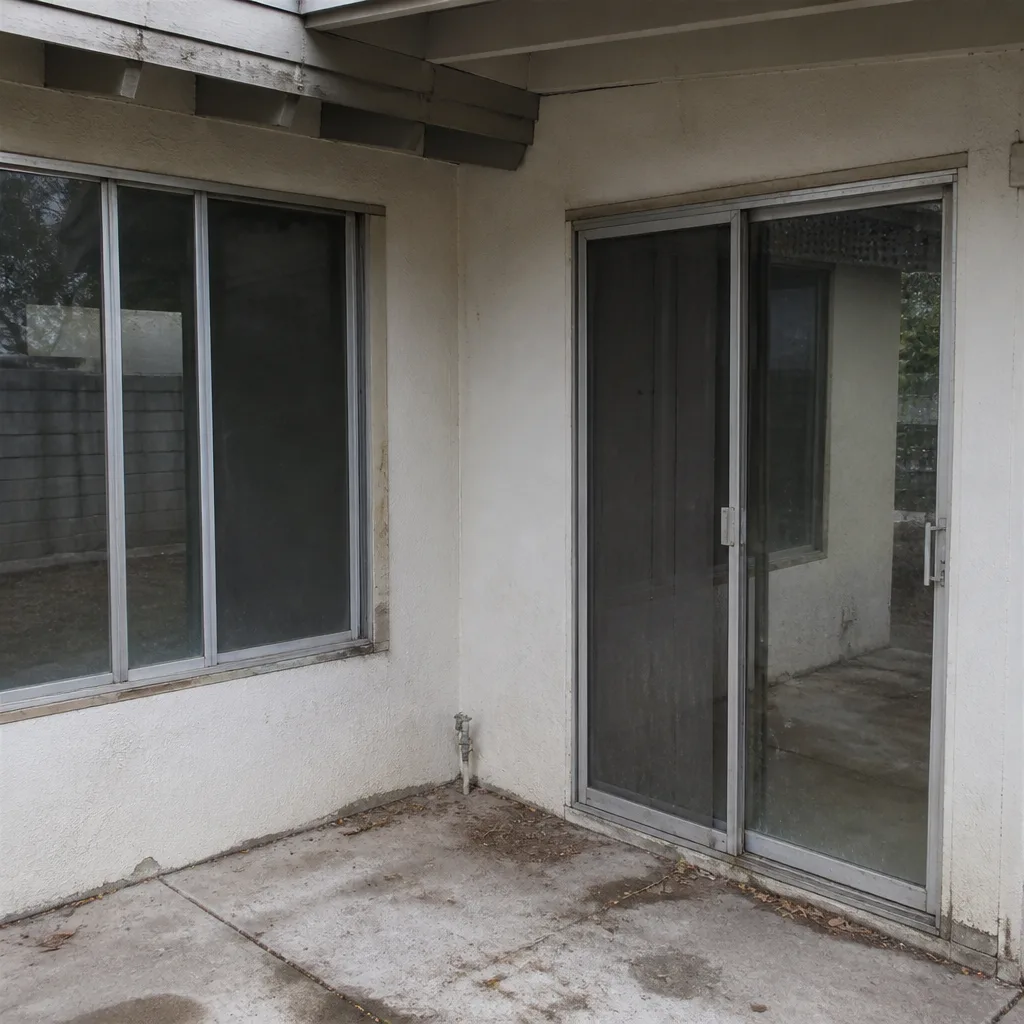 Before
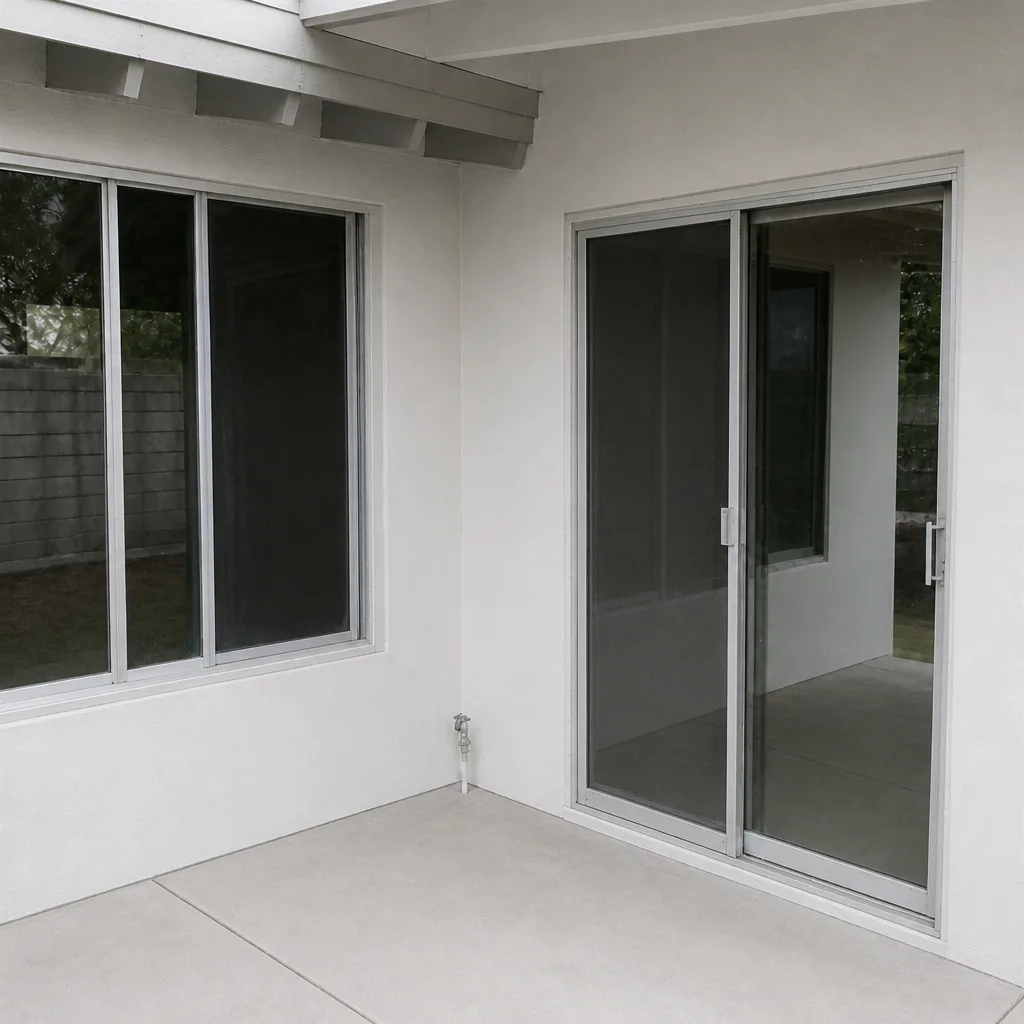 After
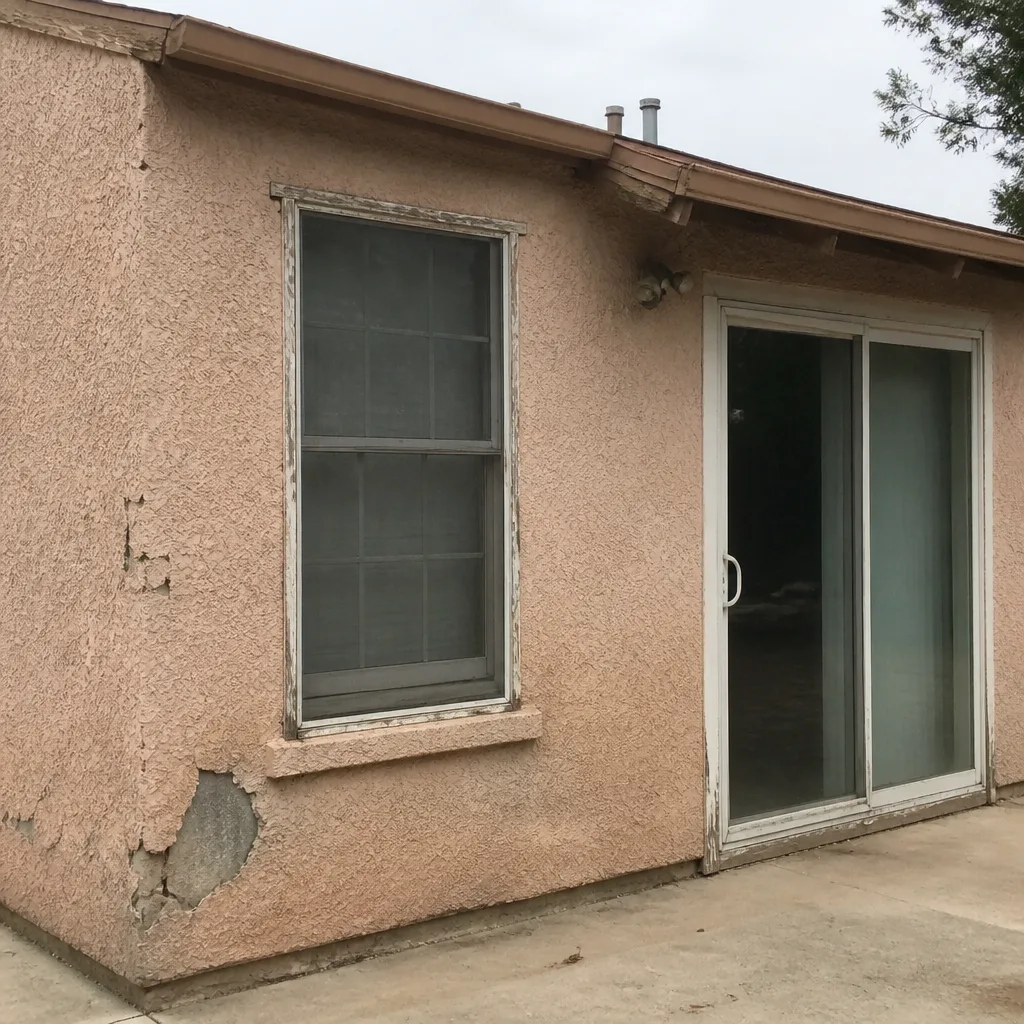 Before
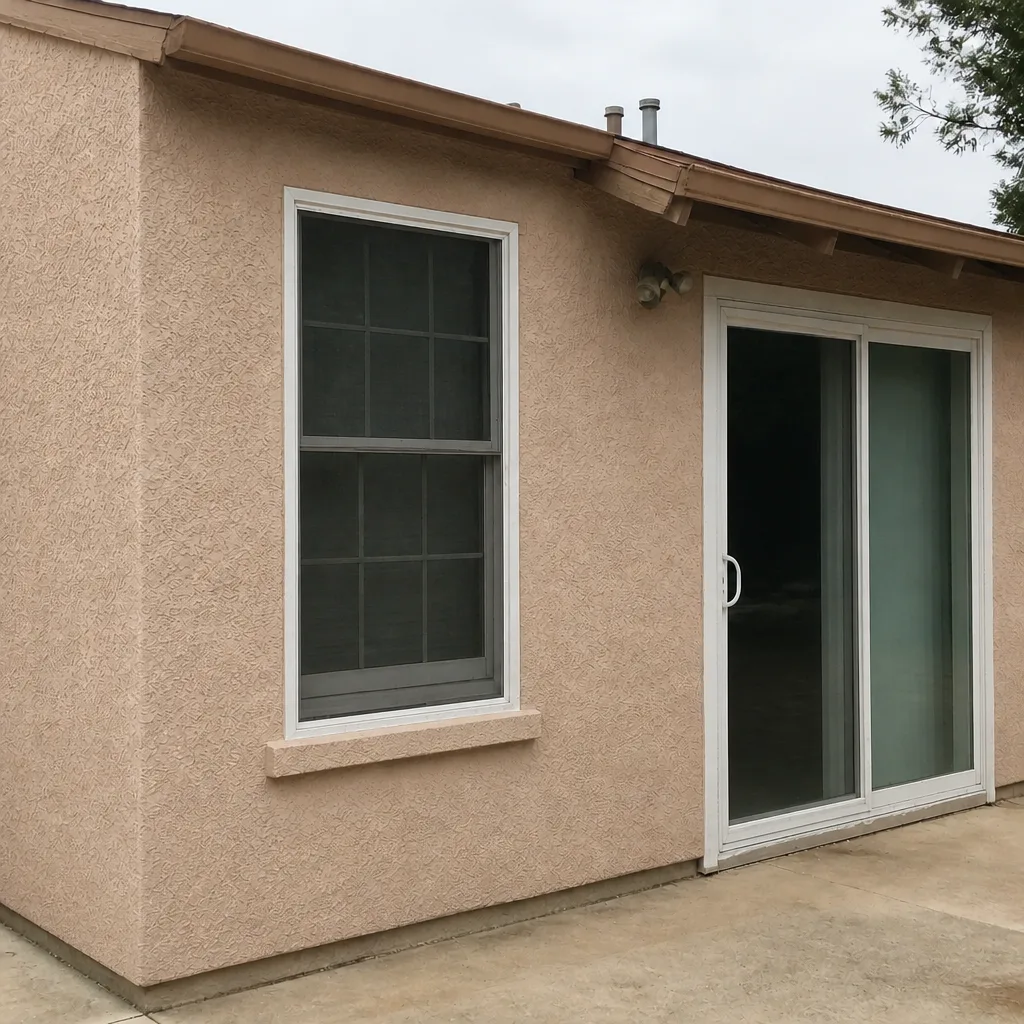 After
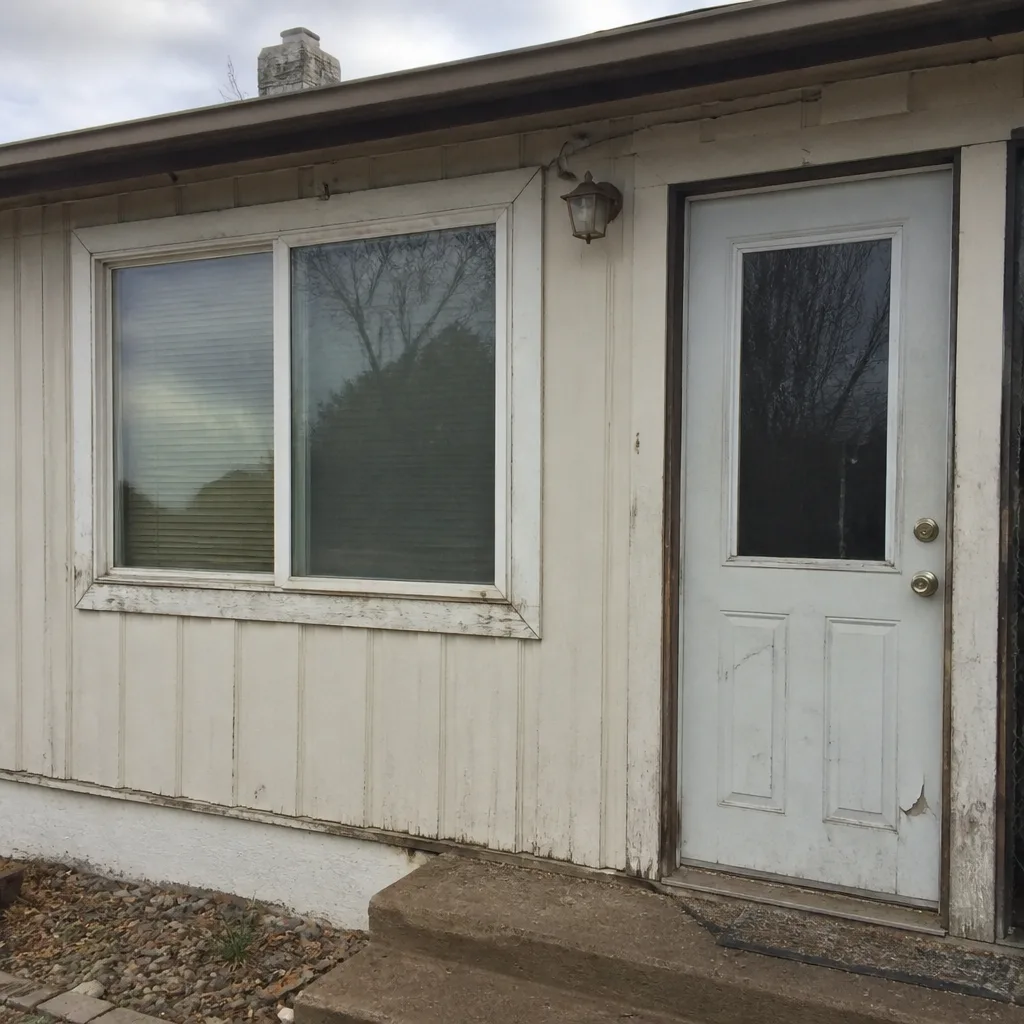 Before
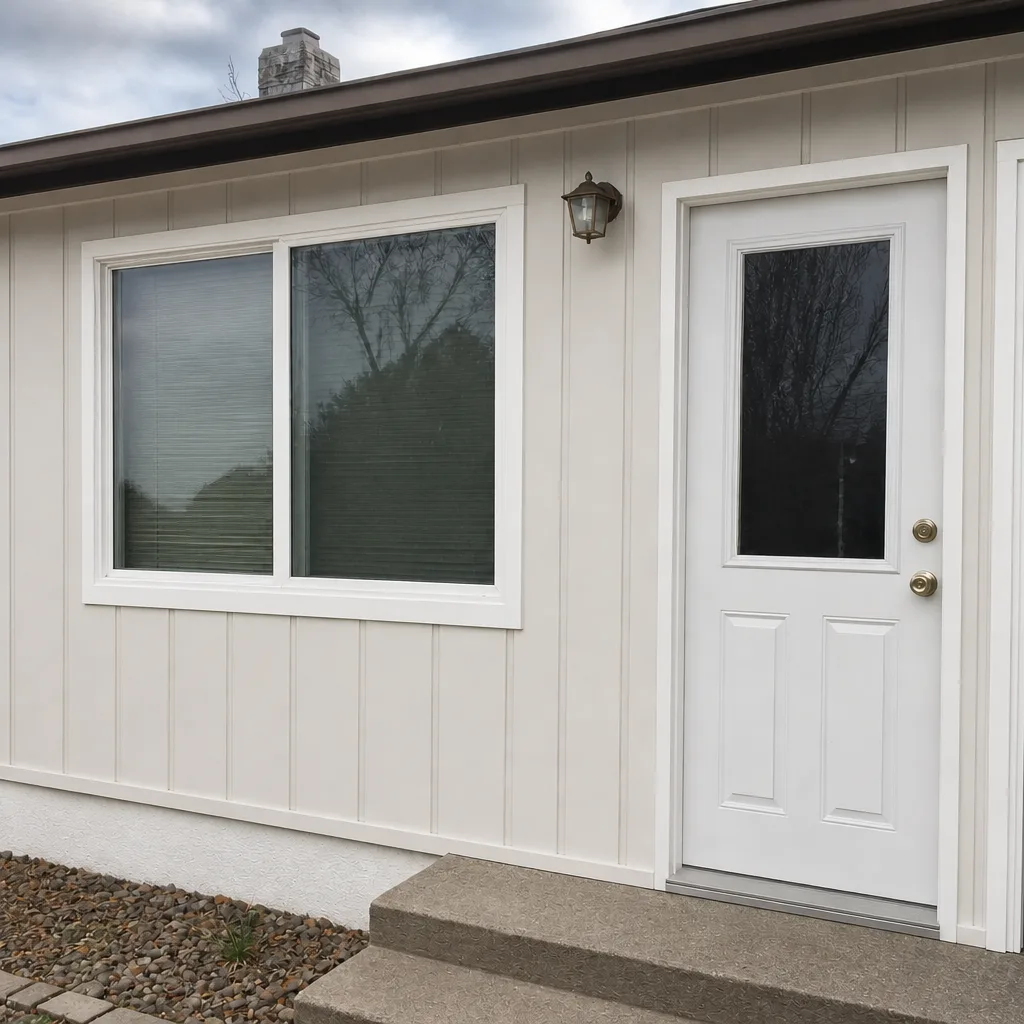 After
Common Mistakes to Avoid
- Assuming “same size” means “no permit.” Same-size is necessary but not sufficient. If the operation type changes, if the frame depth changes, or if the rough opening is modified, the county wants to see a permit.
- Getting HOA approval and stopping there. The HOA doesn’t talk to the county. Two separate processes. Both required. Spring Valley communities with strong architectural review boards make this mistake the most common one we see.
- Hiring an installer who doesn’t know the Nevada energy code. Units that get spec’d to a different state’s climate zone or a lower U-factor will fail inspection, and the homeowner eats the cost of re-ordering.
- Skipping documentation on the product. NFRC labels, spec sheets, and the manufacturer’s published data have to be available. “I think it’s energy-rated” doesn’t close a permit.
- Letting the installer close out the job without the final inspection signed off. An open permit that never gets closed is exactly what causes a title problem years later. If the permit doesn’t have a closed status, the job isn’t done.
- Buying a home with unpermitted work and assuming it’s the seller’s problem. Once you own it, it’s your problem. If a title search reveals an open permit, get the cost quantified before the deal closes.
- Believing the installer’s “no permit needed” without a written scope. In writing, with the specific reason, signed by the installer. If they won’t put it in writing, the answer isn’t “no permit needed,” it’s “we haven’t checked.”
When to Call a Professional
If you’re replacing a single door slab in a Spring Valley closet, this is not a call-a-pro situation. If you’re replacing windows or doors on an exterior wall of your home, opening the scope beyond a true like-for-like swap, or trying to retroactively close out a permit before a home sale, this is. The inspection sequence is unforgiving to a job that wasn’t filed correctly from the start, and the cost of a failed inspection is not just a re-do fee, it’s a delay on the whole project and a possible re-order on product.
The other situation where a call makes sense: any job where your installer talks about “like-for-like” without writing down the five checks we listed earlier. That’s a conversation a professional has with you in the office, on paper, before the order is placed. Winslow Windows & Doors offers free estimates in Spring Valley – call (888) 282-3902. We’ll walk through what your specific replacement needs at the permit level and tell you honestly whether it’s a file-it or a skip-it job.
Frequently Asked Questions
It depends on the scope. A true like-for-like swap in the same rough opening with the same operation type typically does not require a permit. Any change to the rough opening, operation type, frame material, or the number of units in the opening does require one. If the product documentation doesn’t already show the code-compliant U-factor and SHGC, that alone can force a permit file.
The permit history is part of the title search, and an open or missing permit can delay or kill a sale. The buyer’s lender will want to see the permit record as closed. In Spring Valley, we’ve seen closings delayed two to three weeks while a retroactive permit is filed, inspected, and closed. The cost of doing it before a sale is almost always lower than doing it during escrow.
For a straightforward replacement, the permit review is usually a matter of days, not weeks. If the scope involves structural changes, header work, or a new opening in a wall, expect a longer review. The inspection sequence adds a week or two to the job timeline overall. The HOA architectural review is often the longer delay in Spring Valley communities.
The county verifies the flashing and water-resistive barrier integration, the anchoring pattern against the manufacturer’s engineering, the product documentation (NFRC labels or spec sheets) against the Nevada energy code requirements for this climate zone, the air sealing and weatherstripping, and finally that the permit closes on a clean final inspection. Rough-in and framing inspection happen at an earlier stage when the scope involves opening modifications.
In most Spring Valley communities with an active architectural review committee, yes. The county permit handles code, structural, and energy compliance. The HOA approval handles color, style, mullion pattern, and frame material consistency within the neighborhood. Neither substitutes for the other, and skipping either one is a problem you fix later at your own cost.
Yes, provided the specific product line meets the Nevada energy code requirements for the climate zone and comes with documented NFRC ratings. Products from PGT, CGI, and Therma-Tru are commonly spec’d on compliant installs because their published ratings are clear. The product’s rating and the documentation are what the inspector checks, not the brand name on the frame.
The Bottom Line
In Clark County, a window or door replacement isn’t finished when the installer drives away. It’s finished when the permit is closed and the record on file comes back clean on a title search. Like-for-like swaps in the same opening usually don’t need a permit, but anything beyond that does, and the Nevada energy code requirements are enforced at the inspection stage. HOA approval is a separate process, often the longer delay, and it’s mandatory in most Spring Valley communities. If you inherit an unpermitted job, retroactive permitting is doable but the cost goes up the longer you wait. Get it right the first time. Call Winslow Windows & Doors at (888) 282-3902 to schedule your free estimate, and we’ll tell you exactly what your specific job needs. A neighbor you can call at 2 a.m. – and someone will answer. The one down the road.
Written by the team at Winslow Windows & Doors Spring Valley.