
Last updated November 18, 2026
 Sliding glass doors
 Single hung
 Double hung
 Horizontal roller
 Casement
 Bay & bow
 Entry doors
 Impact garage doors
 PGT
 CGI
Free in-home measure and quote - PGT, CGI and CWS impact lines compared on your actual openings, style by style
Get your free estimateWindows & Doors Warning Signs: A Spring Valley Homeowner’s Reference Guide
Most window and door failures in Spring Valley don’t start with a crash or a puddle on the floor. They start with a sticky edge, a whisper of a draft, or a thin white line on the sill that nobody notices for a season. Here’s the counterintuitive part: a door that sticks in spring and frees up by fall is often announcing a framing or foundation shift underneath it, not a door problem at all. Replace that door without diagnosing why it moved and you’ll be standing in the same spot in two years. This guide decodes the specific symptoms our desert climate produces, what each one actually means, and how urgently you need to act. By the end you’ll know which signs to watch, which to schedule, and which mean stop using that door today.
Quick Answer
In Spring Valley, the window and door warning signs that matter most are: doors that stick in one corner and won’t latch seasonally (frame racking or foundation movement, not a door fault), white powdery staining at the sill or weep holes (active water infiltration, not cosmetic), a fogged double-pane window (failed seal, glass replacement needed), and a draft that runs along the bottom or the hinge side (worn sweep or failed frame seal). If a door won’t latch at all or a crack of daylight shows through the frame, stop using that door and get a professional look this week. Everything else is usually a schedule-it-this-month issue, not an emergency.
Styles & brands we work with
- Single hung
- Double hung
- Horizontal roller
- Casement
- Bay & bow
- Sliding glass doors
- Entry doors
- Impact garage doors
- PGT
- CGI
Table of Contents
- Why Doors Stick in Spring Valley (and When It’s Not the Door)
- Weep Holes, Caliche, and Efflorescence: Reading Water Damage
- Fogged Double-Pane Windows: Failed Seals and What They Cost
- The Draft Pattern: Sweep, Frame Seal, or Foundation?
- Cracked Seals, Sun Damage, and Heat on Glass
- Urgency Tiers: What to Watch, Schedule, and Stop Using
- A Seasonal Inspection Checklist for Spring Valley
- Repair or Replace? A Decision Framework
Why Doors Stick in Spring Valley (and When It’s Not the Door)
A sticky door in Spring Valley is almost never a door problem. It’s a foundation or framing problem that the door is simply reporting. That’s the single most useful idea in this whole guide, and it’s the one most homeowners get wrong. When a door drags on the floor, catches at the top corner, or won’t latch without a shoulder, the first question isn’t “do I need a new door” – it’s “why did the opening change shape?”
Spring Valley sits on some of the most reactive soil in the valley, and we regularly see doors in established neighborhoods like Rhodes Ranch and the section near Fort Apache that start sticking in late summer when soils dry and contract, then free up in winter. That’s the tell. If the sticking comes and goes with the season, you’re looking at movement. If the sticking is constant and getting worse in one direction, you’re looking at sustained movement that deserves a professional look.
The two kinds of sticking (and how to tell them apart)
- Normal thermal expansion (benign). Doors swell slightly across the hot months, bind a little, then free up when it cools. It’s even and mild. The door still latches with a nudge and there’s no gap or crack anywhere.
- Frame racking (structural warning). The opening has gone out of square. One corner catches while the opposite corner shows a gap. The latch misses the strike plate, daylight appears along a top or side edge, and it stays that way or worsens regardless of temperature.
The line between them is whether latching is reliable. A door that binds but always latches is a watch-it. A door where the deadbolt won’t seat is racking until proven otherwise, and it’s the sort of thing a trained professional should diagnose before you decide to replace the slab. The good news: a proper inspection can sort out whether this is a hardware, hinge, or framing issue in minutes. Call (888) 282-3902 to schedule a free estimate if you’re unsure which camp your door is in.
Weep Holes, Caliche, and Efflorescence: Reading Water Damage
Two white stains on a window sill look nearly identical, but they mean completely different things. Knowing which one you’re looking at is the difference between a cleaning task and a repair that can’t wait. The first is caliche staining – the mineral-laden desert dust and hardpan residue that blows in and collects at weep holes. It’s cosmetic and common across Spring Valley. The second is efflorescence – the powdery white salt deposits that happen when water moves through concrete, masonry, or stucco, dissolves minerals, and deposits them on the surface as it evaporates.
How to read the two stains
- Caliche/dirt staining: on the outside face, uniform color, wipes away, no bubbling paint or softness underneath. Wipe it off and forget it.
- Efflorescence: powdery and crystalline, recurring after rain, often with paint bubbling or caulk pulling loose nearby. It means water is getting in and finding a way out, and that’s a water-infiltration issue that worsens quietly.
Weep holes are the small drainage slots at the base of most window frames. Their job is to let any water that gets behind the frame out. When a Spring Valley homeowner pokes at a weep hole and it’s clogged with caliche and debris, that’s a benign clog you can clear. When a weep hole is draining rusty or gritty water, or you see efflorescence directly below one, the weep system is working overtime and telling you something upstream is leaking. Call (888) 282-3902 for an inspection if the staining comes back after the first rain; we offer free estimates.
Fogged Double-Pane Windows: Failed Seals and What They Cost
A fogged double-pane window is a failed seal, not a cleaning problem. People have scrubbed at fogged glass for years. It won’t come off, because the haze is inside the sealed cavity between the panes, not on the surface. The argon or air between the glass has escaped and moist air has gotten in, and no amount of windex will fix a broken seal.
The heat accelerates this. Spring Valley’s triple-digit summers stress the perimeter sealant on insulated glass units faster than milder climates do, and we regularly see windows that were installed as a two-pane upgrade fog over within a decade if the seal was marginal to begin with. It’s the specific environmental pressure on insulated units here.
What you’re actually paying for
- Glass unit only (the “pane swap”): replaces just the sealed insulated glass unit inside a healthy, still-square frame. This is the cheaper path when the frame is solid and the seal is the only failure. A licensed pro measures the existing unit and sets a new one.
- Full frame replacement: replaces the entire window because the frame itself is damaged, out of square, or the glass size is no longer a standard fit. This costs more because it’s a new unit, not a glass swap.
Which route is right depends entirely on the frame’s condition, and that’s a judgment call worth getting from a professional – the local pro we connect you with is licensed and insured as their state requires, so the diagnosis carries real weight. We quote both options in writing before work starts, so there’s no surprise invoice afterward. Call (888) 282-3902 for a free estimate in Spring Valley.
The Draft Pattern: Sweep, Frame Seal, or Foundation?
Not all drafts come from the same place, and the pattern tells you which. Before you assume a window or door is “just drafty,” trace where the air is actually entering. Three common patterns map to three different causes.
Three draft patterns and what they mean
- Draft along the bottom of an exterior door: a thin, even line of cold air at the floor line almost always points to a worn door sweep – the flexible seal at the bottom of the door that wears out against pavement and desert grit. Cheap to replace, common in Spring Valley. Check this one yourself first.
- Draft along the hinge side or top of a door: this points to a failed frame seal or weatherstripping rather than the door itself, especially when the door also binds or doesn’t latch cleanly. If the frame has moved, weatherstripping can’t seal against a gap that keeps changing shape.
- Draft that appears and disappears, or a visible gap that widens: this points to foundation movement bending the frame. It changes with the seasons, and it’s the one to get looked at.
We’ve been called to homes in Spring Valley where the owner replaced three door sweeps chasing a draft that never went away, because the real cause was a frame out of square. The sweep was fine. The opening wasn’t. If you’ve replaced the sweep and the draft is still there, call (888) 282-3902 and let a professional read the real pattern. Free estimates.
Cracked Seals, Sun Damage, and Heat on Glass
Spring Valley’s sun is hard on the perimeter of everything. The culprits on windows and doors here fall into a few predictable categories, and a little attention to them tells you what’s normal aging versus a real warning sign.
- Perimeter sealant that pulls away: the caulk line where frame meets stucco or wall is the first line of defense against water. When it cracks and peels under the summer sun, water gets behind the frame. Re-caulk before the next monsoon season rather than after.
- Glass that feels hot but isn’t broken: normal. But if the surface shows a wavy or bowing reflection, the insulated unit may be losing its fit, which points back to a failing seal.
- Sun-faded hardware and finish: cosmetic, not urgent. But if the hardware that latches the window or door is failing to catch, safety and weather protection both drop.
- A window that rattles in wind or when you push it: loose glazing or a worn seal. This one deserves a look; rattles usually mean something’s already loose.
For readers rebuilding a worn-out set of windows altogether, our guides to the Spring Valley windows and doors home page and to window replacement in Spring Valley lay out what a properly sealed upgrade looks like. And if you’re in the middle of hurricane or wind-driven rain concerns, quality impact windows in Spring Valley aren’t just a safety upgrade – they’re a seal upgrade, which is exactly what stops the fogging and infiltration cycle.
Urgency Tiers: What to Watch, Schedule, and Stop Using
Every warning sign on this list falls into one of three urgency tiers. Knowing which is which keeps you from panicking over caliche dust or ignoring a failing latch. Here’s how we sort them, and how we’d sort them in your home.
Tier 1 – Watch it (and re-check in 30 days)
- Mild, even sticking that frees up with the seasons and always latches.
- Caliche staining at weep holes that wipes away and doesn’t return during dry stretches.
- One fogged window in an otherwise solid set; note the date and watch whether more units follow.
- Cosmetic caulk checking on a small section.
Tier 2 – Schedule a professional look this month
- Efflorescence or rust staining at the sill that returns after rain.
- Multiple fogged units on the same floor or wall – a pattern points to a batch seal problem.
- Drafts that persist after you’ve replaced the sweep.
- A door that latches only with effort, or a window that rattles.
Tier 3 – Stop using it today and call now
- A door with a visible gap or daylight through the frame that won’t latch or lock.
- A cracked or broken glass pane, or a window whose frame is visibly separating from the wall.
- Active water entering around a frame during rain, not just staining.
- Any latch failure on an exterior door – it’s a security issue as much as a weather one.
When in doubt, we’d rather take a free look than have you guess. Call (888) 282-3902 to schedule one in Spring Valley.
A Seasonal Inspection Checklist for Spring Valley
A ten-minute walk-around twice a year catches nearly every warning sign on this list before it becomes expensive. Here’s the sequence we recommend for Spring Valley homes. Work from the outside in, and note anything that changes between visits – the pattern of change matters more than any single observation.
- Walk the exterior frames. Look at the caulk line where frame meets wall. Peeling, cracking, or a gap means water can get in. Note it.
- Inspect the weep holes. Are they clogged with desert debris, or draining rusty water? Clogged is benign; draining is not.
- Look at the sills for white stains. Caliche wipes off. Efflorescence is powdery and returns after rain. Save a photo of both for a pro to compare.
- Check every window for fog inside the glass. A quick flashlight test on a dark night makes it obvious. Fog in the cavity means a failed seal.
- Open and close every exterior door and test the latches. A door that used to close easily and now takes a shoulder is reporting a change. Test the deadbolt too – if it won’t seat, the opening has moved.
- Run a draft trace. On a cool evening, hold the back of your hand along the bottom, top, and hinges of each door. Note where the air is coming in, not just that it’s coming in.
Repair or Replace? A Decision Framework
Once you’ve spotted the warning signs, the next question is what to do about them. The answer usually comes down to one thing: is the frame healthy? If the frame is solid and square, you’re usually fixing a component – a sweep, a seal, a glass unit, a piece of hardware. If the frame has moved or rotted, you’re replacing a window or door, and the good judgment is to get that right the first time.
A repair makes sense when the symptom is one component and the frame is square. Call it if you have a lone drafty door bottom, a single fogged glass unit in good framing, or a failed latch on an otherwise solid door. A fresh window installation in Spring Valley is the right call when the frames themselves are failing, when multiple units fog on the same wall, or when a patterned water problem can’t be sealed at the frame.
In our experience, the homeowners who replace a door without checking the frame end up calling for a second replacement within two years – the new door binds in the same corner because the opening underneath never got corrected. The one that lasts is the one that matches the fix to the actual cause. Call (888) 282-3902 to schedule a free estimate and we’ll help you sort which side of that line you’re on. We install from trusted brands like PGT, Therma-Tru, and Mr-Glass, and quotes are documented before work starts.
Common Mistakes to Avoid
- Replacing a sticking door without finding the cause. A sticky Spring Valley door is usually reporting a foundation or framing move. Swap the door and you’ll be back in the same position within two years.
- Scrubbing fogged glass for hours. The haze is inside the sealed cavity of a failed insulated unit. Cleaning won’t touch it, and spending effort there delays a repair that’s actually needed.
- Mistaking efflorescence for caliche dust. Caliche wipes off; efflorescence returns after every rain. Treating a recurring water-stain as cosmetic lets active infiltration keep working behind the frame.
- Replacing door sweeps as a first resort on every draft. A bottom-edge draft is often a sweep, but a hinge-side or top draft usually isn’t. Diagnose the pattern before you spend on parts.
- Ignoring a latch or deadbolt that won’t seat. A door you can’t lock is both a security and weather issue, and it’s telling you the opening has shifted. That belongs in the stop-using-it-today tier.
- Judging a window by the glass surface alone. The frame and perimeter sealant are where the water gets in. Look at the caulk line and the sill, not just the pane.
- Trusting a verbal “I’ll take a look” without a written diagnosis. In a five-figure project, get the fix and the price in writing so there’s no change-order surprise mid-job.
See the difference
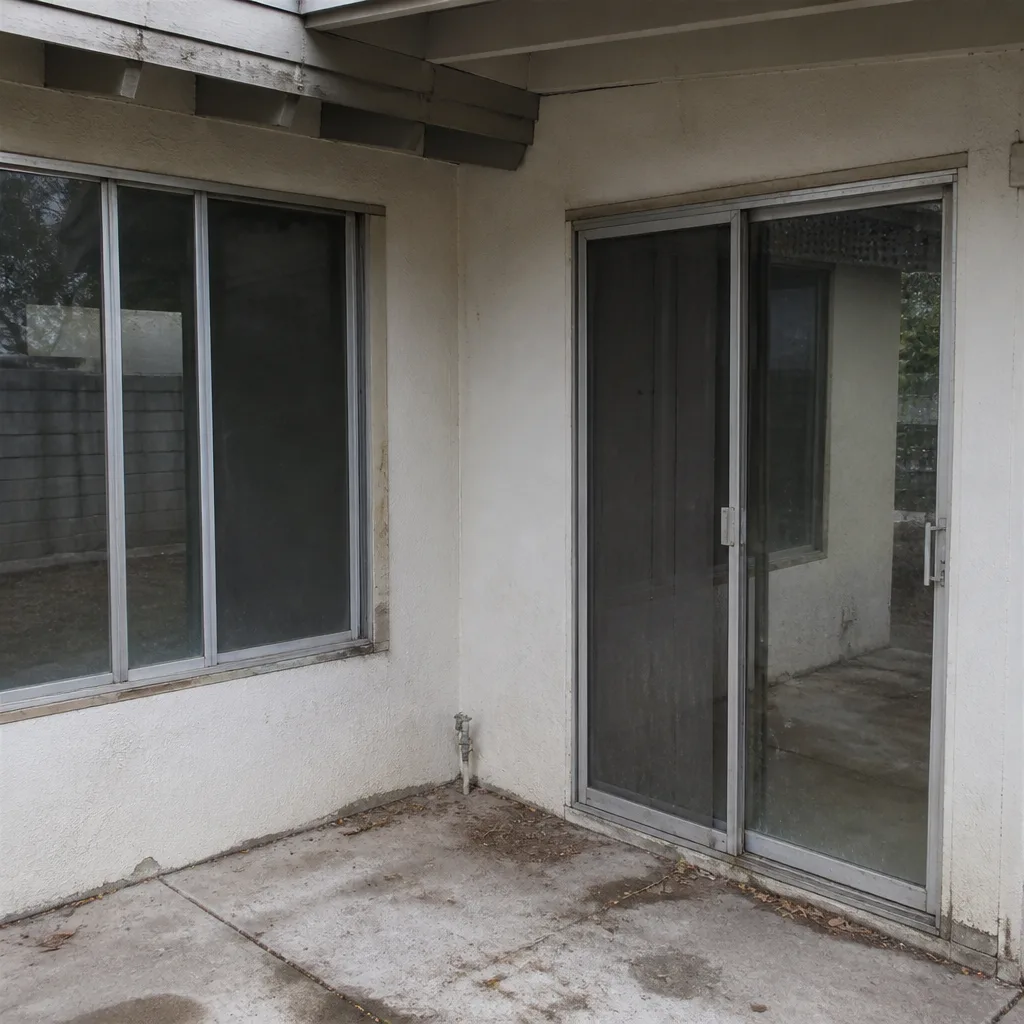 Before
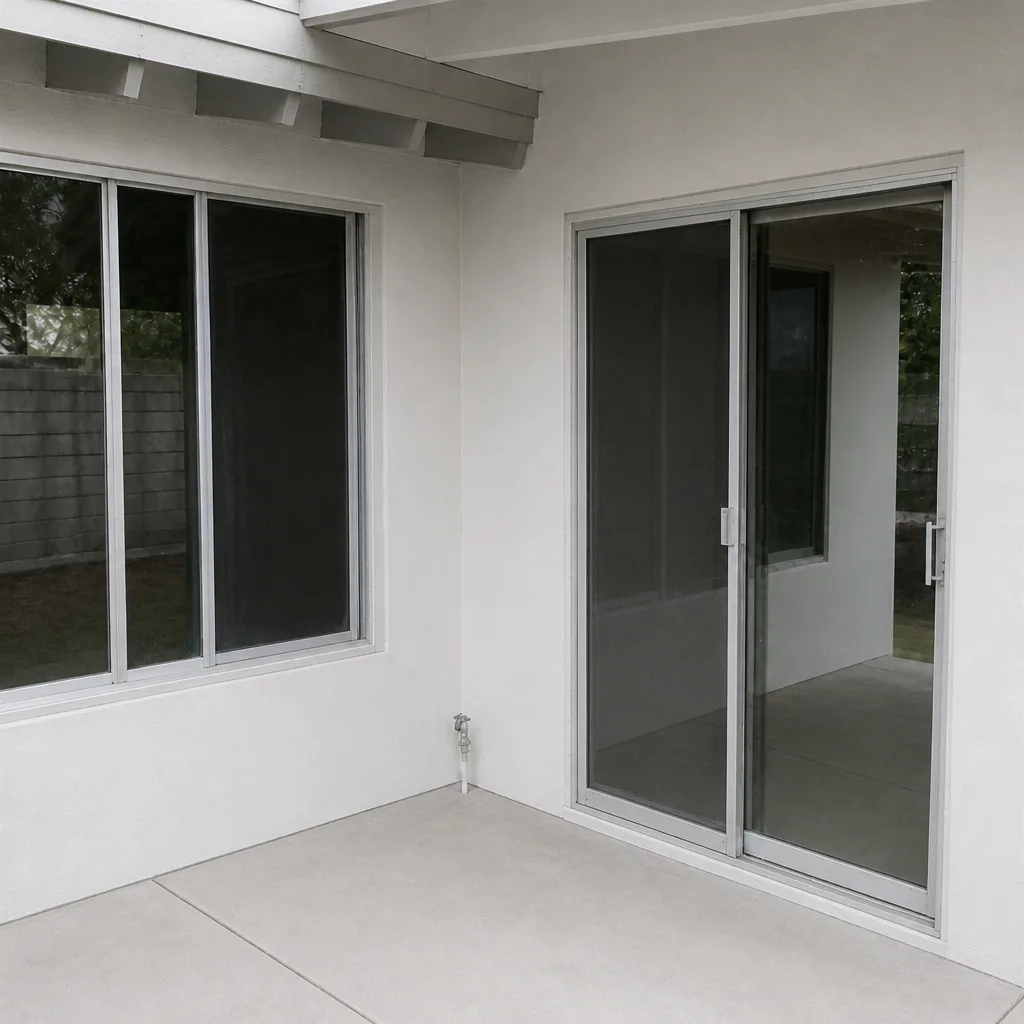 After
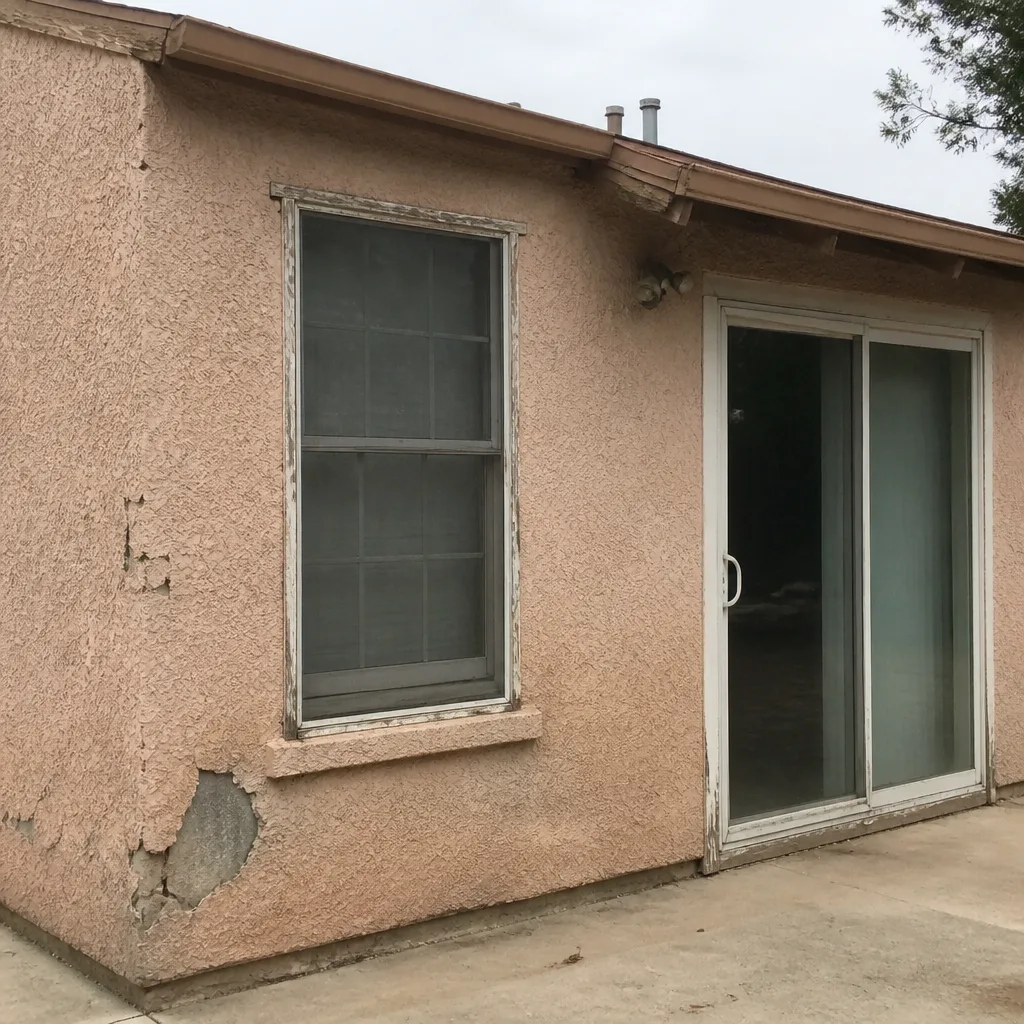 Before
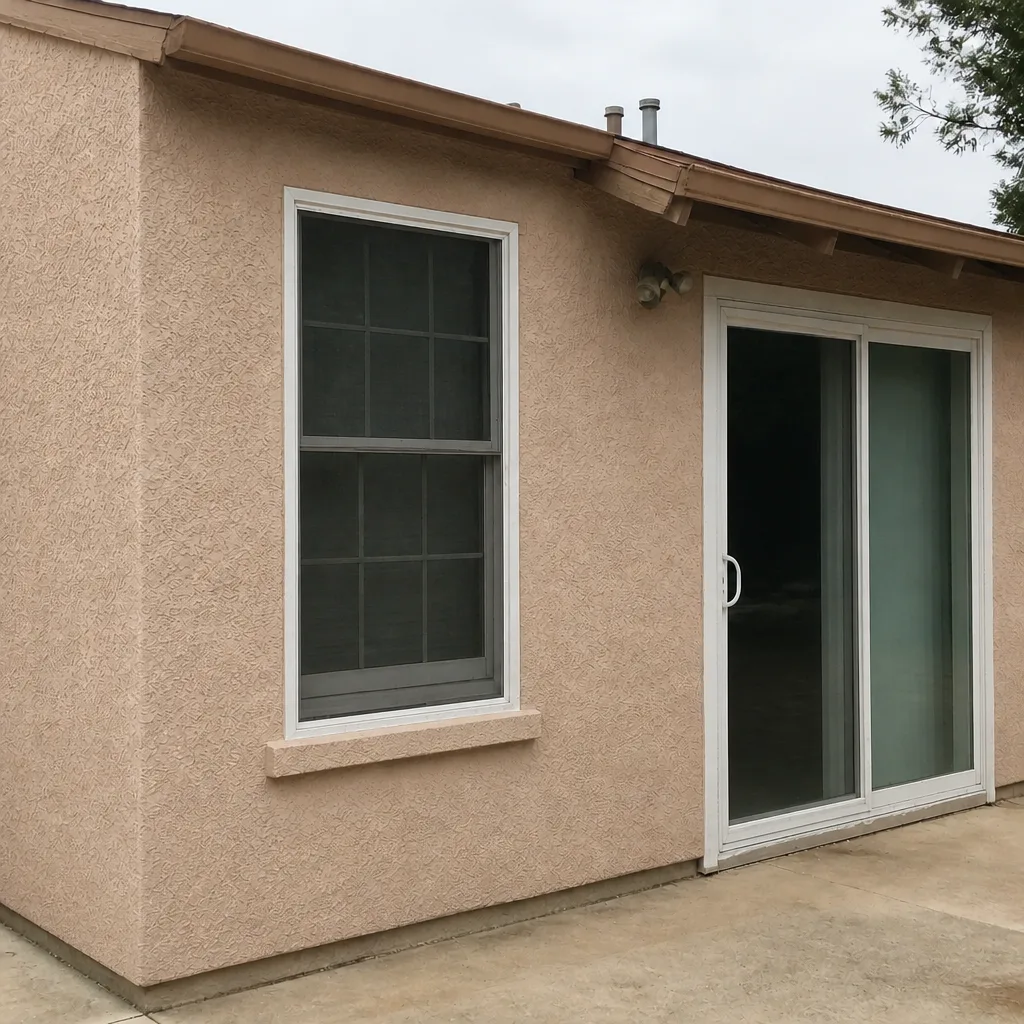 After
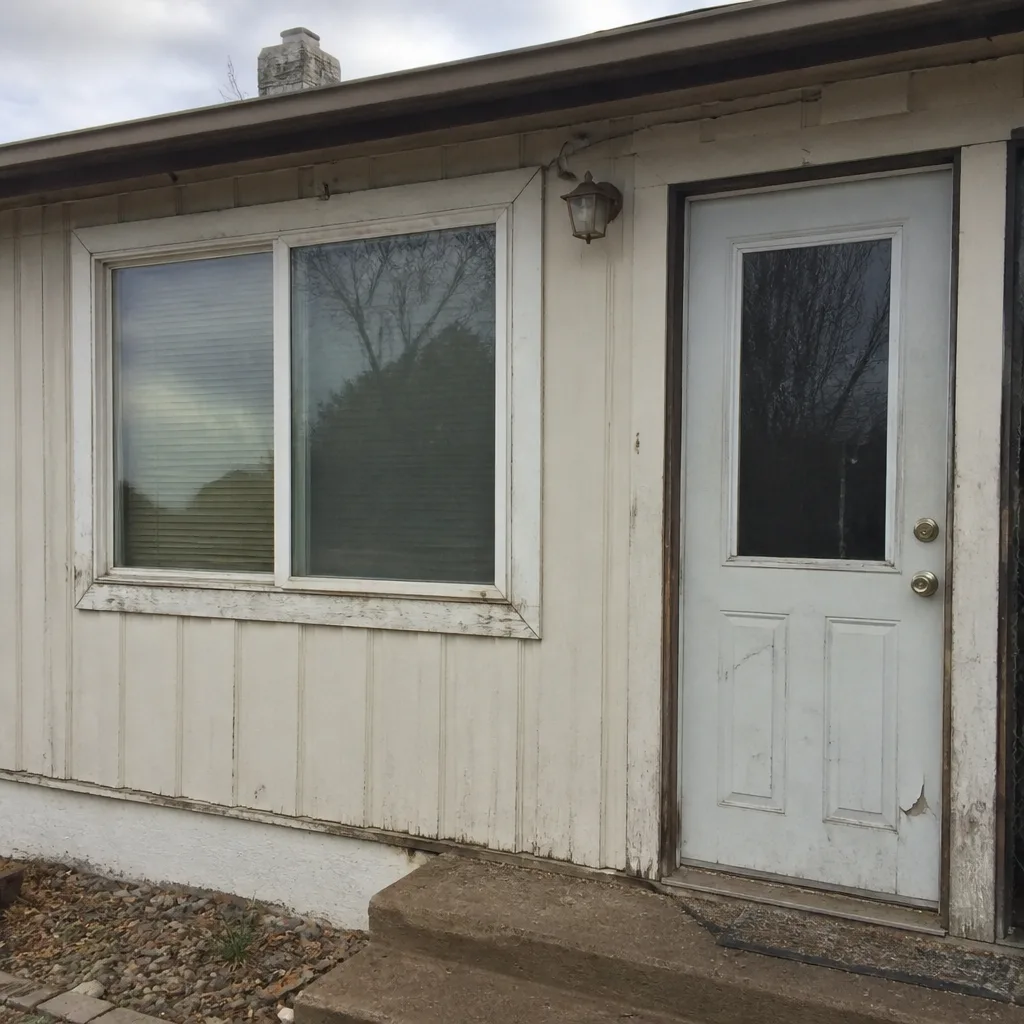 Before
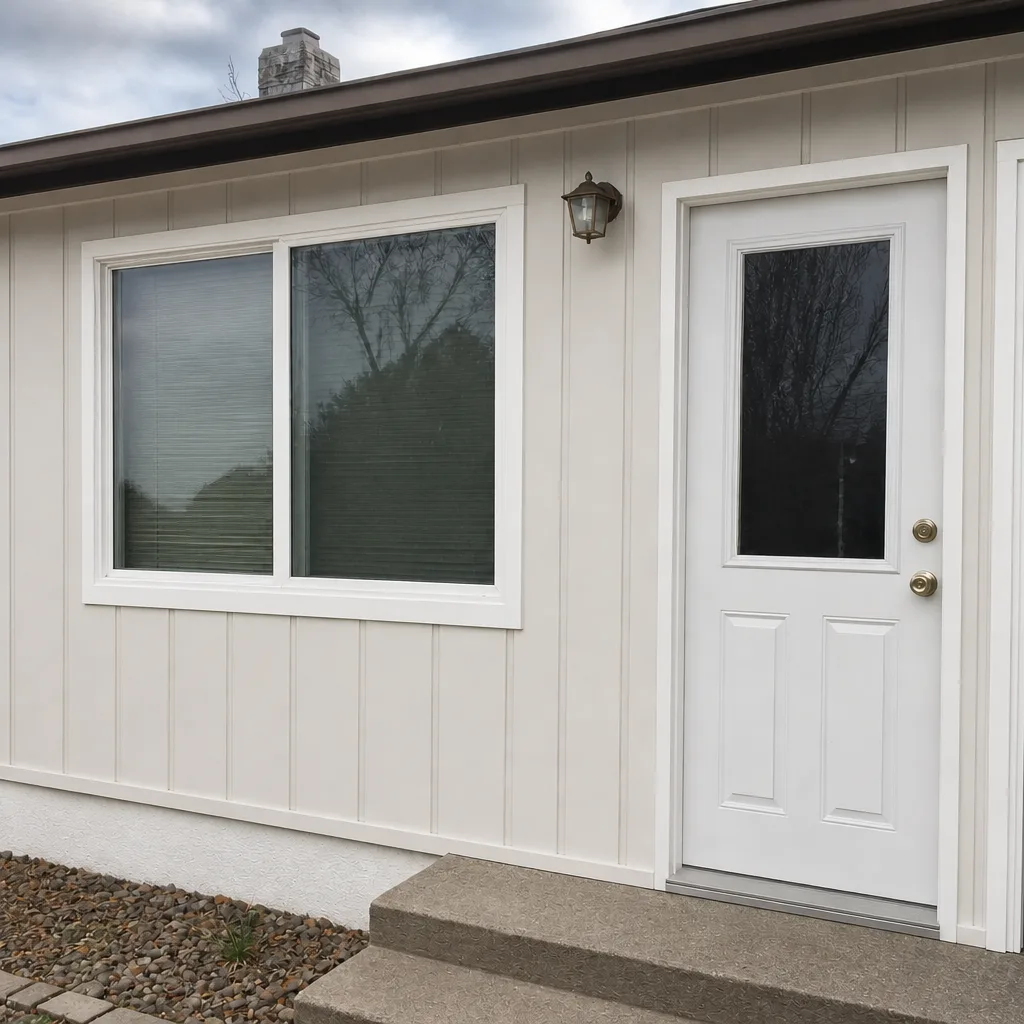 After
When to Call a Professional
Call a professional when the symptom points to the frame rather than the component: a door that won’t latch, a visible gap or daylight through a frame, efflorescence that keeps returning, multiple fogged units on the same wall, or a draft that survives a sweep replacement. Those are the signs worth diagnosing before you buy anything. For anything in Tier 3 above, don’t wait – a door that won’t lock or active water coming in around a frame is a real problem now, not a maintenance item. Winslow Windows & Doors Spring Valley offers free estimates in Spring Valley – call (888) 282-3902, and a live person answers any hour. The local pro we connect you with is licensed and insured as their state requires, arrives in uniform, and quotes both the fix and any replacement in writing, so you’re comparing apples to apples. One call gets you a straight answer about which tier your problem belongs in.
Frequently Asked Questions
A sticking door in Spring Valley is usually not the door – it’s the opening it hangs in moving, most often because of reactive soil drying and shifting. If it sticks seasonally and always latches, it’s a watch-it. If it won’t latch or you see a gap or daylight, treat it as structural until a professional says otherwise. Call (888) 282-3902 for a free estimate.
A fogged double-pane window means the seal between the panes has failed and moist air has gotten inside the cavity. It’s not a cleaning issue and won’t come off. Depending on the frame’s condition, you can replace just the glass unit or the full window; a professional will quote both in writing. Call (888) 282-3902 for a free estimate.
It depends on the stain. Caliche dust wipes away and is common in Spring Valley. Efflorescence is powdery, returns after rain, and means water is moving through and finding a way out – that’s active infiltration worth scheduling a look this month. If it keeps coming back, call (888) 282-3902.
You usually fix the cause, not the door, when the frame is healthy. A door that binds because the frame has moved won’t be solved by a new slab – the new one will bind too. Get a diagnosis first; replacement is right when the frame is the problem. Call (888) 282-3902 for a free estimate.
Look at where the air enters. A thin draft along the bottom edge is usually a worn sweep. Draft along the hinge side or top, or a draft that changes with the seasons, usually points to the frame or weatherstripping. If a new sweep doesn’t fix it, call (888) 282-3902.
Broken glass, a door that won’t latch or lock, a frame visibly separating from the wall, or active water entering during rain. Those belong in the stop-using-it-today tier. Everything else that’s not benign is usually a schedule-it-this-month item, not a same-hour emergency. Unsure? Call (888) 282-3902 and we’ll help you sort it.
The Bottom Line
Most window and door failures in Spring Valley announce themselves before they get expensive, but only to homeowners who know what they’re looking at. A seasonally sticky door is your frame talking, not your door. A recurring white stain at the sill is water finding its way through, not a cleaning chore. A fogged pane is a broken seal that no amount of scrubbing will fix. Sort every sign into the three urgency tiers – watch, schedule, or stop using – and you’ll catch the real problems while they’re still cheap to fix. Free estimates and a written diagnosis from Winslow Windows & Doors Spring Valley, the one down the road. Call (888) 282-3902.
Written by the team at Winslow Windows & Doors Spring Valley.